20/04/2026
Skilled Trades Jobs UK (Construction)
Skilled tradespeople and construction operatives form the essential workforce that physically builds the UK's homes, commercial buildings, infrastructure, and public facilities. Without skilled bricklayers, carpenters, electricians, plumbers, groundworkers, plasterers, painters, tilers, steel fixers, and the broader labour workforce, no construction project can be delivered. The UK's skilled trades sector is experiencing a sustained period of high demand, driven by the country's ambitious housebuilding targets, ongoing infrastructure investment, commercial development activity, and the massive retrofit and net-zero refurbishment agenda.
The UK construction skills shortage at the trades level is one of the most significant structural challenges facing the industry. According to CITB (Construction Industry Training Board), the industry needs to recruit tens of thousands of skilled workers annually just to maintain current output levels, before accounting for the additional workforce needed to deliver ambitious housing and infrastructure targets. For skilled tradespeople, this translates into exceptional employment security, strong wage growth, and genuine choice in where and for whom they work.
Construction Job Board lists live vacancies for skilled tradespeople across every discipline, sector, and region of the UK. Whether you are a fully qualified electrician seeking a new permanent role, a bricklayer looking for contract work on a major housing development, an experienced carpenter seeking an employer with better rates and progression opportunities, or a groundworker ready to step up into a supervisory role, you will find the right opportunity here.
The range of skilled trade roles available across UK construction is broad. Bricklayers are in demand across residential housebuilding, commercial masonry, and conservation work. Carpenters and joiners are needed for first and second fix on housing and fit-out projects. Electricians are required across domestic, commercial, and industrial sectors, with EV charging and renewable energy installations creating new specialist demand. Plumbers and gas engineers are essential across housing, commercial, and M&E projects. Groundworkers underpin every construction project, handling excavation, drainage, concrete foundations, and external works.
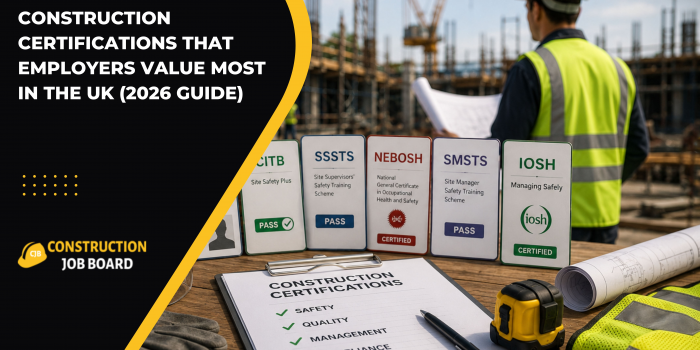
For most skilled trade roles in the UK, a CSCS card is the baseline industry requirement for site access. Tradespeople typically hold NVQ Level 2 or Level 3 in their trade, obtained through apprenticeship or an approved training centre. Electrical operatives hold 18th Edition wiring regulations qualification; gas engineers hold ACS (Accredited Certification Scheme) qualifications. A current CITB Health, Safety and Environment test pass underpins most CSCS card applications.
Pay for skilled tradespeople in the UK has risen significantly in recent years, driven by the skills shortage. Fully qualified electricians earn between £35,000 and £55,000 per annum, or £180 to £280 per day on a contract basis. Qualified plumbers earn similar rates. Bricklayers earn £32,000 to £48,000, with piece-work arrangements offering higher earnings for efficient workers. Groundworkers earn £28,000 to £42,000, with experienced gangers and foremen earning more.
The fastest route to higher earnings and career progression from a skilled trade background is through developing supervisory skills and qualifications. The foreman to site supervisor to assistant site manager pathway is well-trodden by trades professionals across the UK industry. Many of the most successful construction managers, contracts managers, and operations directors began their careers laying bricks, running cables, or digging foundations.
Construction Job Board is the dedicated platform connecting skilled tradespeople with employers across the UK. Register your details today to access live trade vacancies from housebuilders, main contractors, specialist subcontractors, and labour agencies.
FREQUENTLY ASKED QUESTIONS (FAQs)
Q1. What skilled trades are most in demand in UK construction?
Electricians, plumbers, bricklayers, carpenters and joiners, groundworkers, plasterers, and steel fixers are consistently among the most in-demand skilled trades in the UK. The shift towards EV charging installation, heat pump fitting, and renewable energy is creating additional demand for electricians and plumbing and heating engineers with low-carbon technology skills.
Q2. Do skilled tradespeople need a CSCS card?
Yes. The CSCS (Construction Skills Certification Scheme) card is the standard qualification card required for access to the vast majority of UK construction sites. Cards are available at different levels depending on occupation and qualifications held. Most skilled operatives hold a Blue Skilled Worker card, which requires a relevant NVQ Level 2 or 3 and a passed CITB Health, Safety and Environment test.
Q3. What is the average wage for a skilled tradesperson in the UK?
Qualified electricians earn £35,000 to £55,000 per year. Plumbers and heating engineers earn similar rates. Bricklayers earn £32,000 to £48,000. Carpenters and joiners earn £28,000 to £45,000. Groundworkers earn £28,000 to £42,000. Day rates on major projects and contract work typically exceed equivalent permanent salaries.
Q4. What is an apprenticeship in construction and how do I apply?
Construction apprenticeships combine paid on-the-job training with college-based study to deliver a recognised trade qualification (typically NVQ Level 2 or 3). They are the primary vocational entry route into skilled trades and are available across all major construction disciplines. CITB (Construction Industry Training Board) and individual employers offer apprenticeship programmes. Applications are made directly to employers or through CITB's training networks.
Q5. What are CSCS card colours and what do they mean?
CSCS card colours denote different levels of occupation and qualification. Green cards are for labourers who have passed the health and safety test. Blue Skilled Worker cards are for qualified tradespeople with NVQ Level 2. Gold Advanced Craftsman cards require NVQ Level 3. White Professionally Qualified cards are for degree-qualified professionals. The card type required depends on the role and site requirements.
Q6. Is there a shortage of skilled tradespeople in the UK?
Yes. The UK construction industry has a well-documented and growing shortage of skilled tradespeople at every level. CITB data consistently shows the industry needs to recruit tens of thousands of additional workers annually to meet current and projected workloads. This shortage means skilled tradespeople have excellent employment prospects, strong negotiating power on wages, and significant choice in roles and employers.
Q7. Can skilled tradespeople progress into management?
Yes, and it is one of the most common career progression routes in UK construction. Experienced tradespeople can progress into gang foreman, general foreman, site supervisor, assistant site manager, and ultimately site manager roles. Investment in supervisory qualifications (SSSTS, NVQ Level 4 in Construction Supervision) and, eventually, site management qualifications (SMSTS, NVQ Level 6) enables this progression.
Q8. How do I find skilled trades jobs in the UK?
Search constructionjobboard.co.uk for your specific trade — 'bricklayer', 'electrician', 'plumber', 'groundworker', etc. — combined with your preferred region. Register your details to be contacted by employers, subcontractors, and construction labour agencies. Browse by sector to find permanent, contract, or CIS (Construction Industry Scheme) roles.